Friday, 10 February 2012

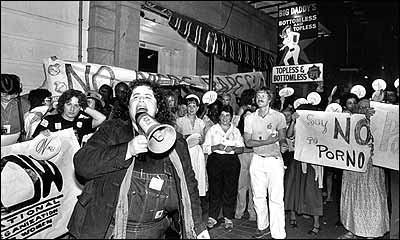
Germaine Greer - Wonderful Woman No. 41


Germaine Greer - Born 1939
Australian Writer, Journalist and Television Personality

Added to the album by a wonderful woman called Jules


Like a selection of other women in the album, such as Sarah Daniels (Wonderful Woman No. 26 - http://iamawonderfulwoman.blogspot.com/2012/01/sarah-daniels-wonderful-woman-no-27.html) and Andrea Dworkin (Wonderful Woman No. 36 - http://iamawonderfulwoman.blogspot.com/2012/02/andrea-dworkin-wonderful-woman-no-36.html), Germaine Greer is a woman who is both revered and despised for her views. She is also often maligned, said to be a man-hater, she is not, though she has stated that many men have a deep-rooted hatred of women.

In 1970, Germaine became an international best-seller with her most famous work, The Female Eunuch. The book is widely considered one of the most important pieces of feminist literature and was published at a time of enormous cultural change in western society. It completely sold out on it's second publication and has been a much used source for feminist arguments since. The text discusses the traditional female role in society and cites suburban, capitalist lifestyles as being repressive, rendering the females of such society eunuchs (castrated from an early age). The book received critical acclaim from some sources and was widely criticized by others.

She wanted women to undergo a profound change in the way they viewed themselves and their relationships with men.
Louis Nowra, Playwright


Since The Female Eunuch, Germaine has written many other books with a wide range of subject matter, including female artists and society's unwillingness to consider them great as they do with men - a subject discussed in the blog entry for Frida Kahlo (Wonderful Woman No. 37 - http://iamawonderfulwoman.blogspot.com/2012/02/frida-kahlo-wonderful-woman-no-37.html), she has written about sexuality, fertility, family, travel, history, female genital mutilation, art and the menopause. Germaine has also written and spoke about Australian Aboriginals, their suffering as a result of the English colonising Australia and the racism they still receive from many corners of Australian society.

Germaine has written for a number of newspapers and magazines, including Private Eye under the pseudonym Rose Blight. She has written columns in a number of national newspapers including The Guardian and The Sunday Times. And, has carved out her own role as a TV personality, appearing on everything from Celebrity Big Brother to Question Time, in her own inimitable style, passing comment on everything from glamour models to the war in Afghanistan.

Love her or loathe her, Germaine has been an inspiration to many. Her arguments have been consistent, intelligent and passionate. For these reasons, she is a fabulous addition to our Wonderful Women.

All societies on the verge of death are masculine. A society can survive with only one man; no society will survive a shortage of women.
Germaine Greer


Thank you, Jules for this and your other suggestions (to follow).

Thursday, 9 February 2012

Grace O'Malley - Wonderful Woman No. 40


Grace O'Malley - 1530-1603
Irish Pirate Queen


I suspect part of what I know about The Pirate Queen is myth and that there is some blur between historical fact and Irish folklore where Grace O'Malley, or Grainne Mhaol to give her Gaelic name, is concerned. Even so, she was a force to be reckoned with and one of the most bad-ass ladies to be featured in this album. I remember my late paternal grandmother telling stories and singing about Grace, so perhaps her inclusion is also, in part, a nod to be celtic heritage.

The walls of Carrick Clooney
Now lie crumbling and low
Its battlements dismantled are
All most over every stone.
But the rebel youth in Westport
Feel their Irish hearts aglow
When they tell how Grace O'Malley
Fought and conquered in Mayo


After begging to go on a voyage with her father and brothers and being told she could not because she was a girl, it is said that Grace cut off all her blonde hair, put on her brother's clothes and demanded that she could do whatever the male members of the family could do. For many years, Grace commanded fleets of ships, she was a well respected sailor and captained many men. She fought off pirates and was a fierce swords woman as well as a master of the waves. She earned the family a great fortune, they owned islands and castles as well as a fleet of more than 200 ships.

As the English began to colonise the counties of Ireland, they forced clan leaders out of their positions and demanded the land of the people for themselves. Anyone who opposed British rule were deemed rebels and were at the mercy of Queen Elizabeth I's iron rule - this included Grace. She refused to pay taxes imposed on ships by the British, instead turning to piracy and attacking British ships and stealing their wealth, taking prisoners from the gentry and generally causing as much disruption to the invasion as possible. The British labelled her a pirate, the Irish labelled her the Pirate Queen.

There were many battles, her castles were captured and her lover killed. At the age of 56, Grace was captured by the English and execution was ordered. She escaped death by a prisoner exchange and by promising to reform her ways. For a while, her clan even joined forces with the British to counter attack after an attempted Spanish invasion. Grace herself is believed to have climbed aboard a ship and slayed hundreds of Spanish sailors with her men.

Grace wrote to Elizabeth Tudor, demanding that members of her clan be returned to Ireland after they had been captured in a raid by British forces. In fact, she did not wait for the Queen to respond, instead she set sail for England where she demanded an audience with the monarch. She is reported to have entered the chamber of Elizabeth I with a concealed dagger and refused to bow before her as she would not acknowledge her as Queen of Ireland, this was pretty risky given Elizabeth's reputation of being a bit of a bad-ass herself. The two came to an agreement, Grace's family would be returned if she stopped interfering with British rule.

Grace lived to the age of 70, in one of her castles, with her fortune in tact, having never been defeated in battle. I think that makes her pretty damned special and a noble member of this legion of wonderful women.

Wednesday, 8 February 2012

Doreen Lawrence - Wonderful Woman No. 39


Doreen Lawrence - Born 1952
British-Jamaican Justice Campaigner


If this list was to ever be ordered, most of us would put Doreen Lawrence near to or at the top.
Lee, A Wonderful Man


I would not know where to begin with ordering this collection of women but I would have to agree that this one is pretty stand-out wonderful. There are a number of women featured in the album who we might never have known of, if it were not for some terrible event. They would have just gone on with their lives in anonymity and we would be none the wiser of their existence. It is not that these women have endured a terrible event that makes them wonderful, it is how they reacted to it.

Doreen led a life that would be considered normal, she was a mother, a wife and she worked as a special needs teacher. On 22nd April 1993, Doreen's life changed for ever.

As he stood at a bus stop in London, her 19 year old son, Stephen, was attacked and murdered. He had not provoked his attackers, he was not a member of a gang... he just happened to be black. Stephen aspired to become an architect. His mother, Doreen, had so much hope for her son... to hear of him being racially abused, hurt and then left to bleed to death in the street... well, it is hard to comprehend such pain and grievance.

The tragedy of Stephen's story does not end there. Stephen's killers evaded justice for many years, the police made a catalogue of mistakes and oversights in the case. Instead of imploding with the grief of losing her child, Doreen fought tooth and nail for justice for Stephen. She strongly believed that institutional racism within the police force caused the investigation into the murder to be so incredibly flawed. It was she that gained the support of the then-Home Secretary, Jack Straw, and pushed for a public enquiry into Stephen's death. She and the rest of the Lawrence family, attempted to take those they believed to a private trial, having been failed by the magistrates court. And eventually, just last month after years of campaign, two of the boys who killed Stephen that night, Gary Dobson and David Norris, were eventually found guilty of the murder and imprisoned for their disgusting, hateful crime.

Mr and Mrs Lawrence's campaign for the truth has been pursued by them with huge dignity, courage and determination.
Jack Straw


Doreen not only campaigned for justice for her own son, she has also worked on behalf of other parents whose children have been the victim of racial hate crimes. She has worked to improve race relations and understanding within the police force, securing much needed reform in the service and she continues to be selected to sit on panels with the police service and the Home Office. To create a positive legacy in Stephen's name, Doreen opened the Stephen Lawrence Charitable Trust which promotes social justice and provides access and opportunities.

It is because of them [the Lawrence family] frankly that we ended up with a public inquiry which has had the most massive impact on policing and beyond. I think it is perfectly possible we would not be exactly where we are today without the work they did.
Cressida Dick, Acting Deputy Commissioner for the Metropolitan Police


In the midst of taking suggestions of women to add to the album, a number of people have said they would like to add their mum. My response to this has been to point out Doreen, who is here as an example of a wonderful mother, as well as one of the most wonderful of women.

If I could get my son back I would give up everything I have now, just to be what I was before: a quiet person, getting on with life.
Doreen Lawrence

Tuesday, 7 February 2012

Louisa May Alcott - Wonderful Woman No. 38


Louisa May Alcott - 1832-1888
American Author


There is no conceivable way I could even begin to write about every book that has ever meant anything to me. From being a babe in arms to the age I have reached, very few days will have passed where I have not either read or been read to. As a child there were many books I loved, notably The Faraway Tree and a number of others by Enid Blyton, The Worst Witch series by Jill Murphy (I longed to be just like Mildred Hubble, flying around on a broomstick), the What Katie Did stories by Susan Coolidge (perhaps there is a theme of untidy girls in this list somewhere) and most fondly remembered is Little Women by Louisa May Alcott.

Good books, like good friends, are few and chosen; the more select, the more enjoyable.
Louisa May Alcott


Little Women is the first book that I remember moving me to tears, it didn't just move me, it completely broke my heart. I remember sobbing and sobbing. And I still love that words on a page can do that, can leap out and grab you and make you think and feel and laugh and cry. What a miserable world this would be without a good book.

I found myself identifying with the character Jo March (who Louisa May had based on herself). She too was a tom-boy, who positively rejected all notions of being lady-like and feminine. She wrote plays and had her sisters act them out, something I remember enforcing on various other children in our neighbourhood when I was growing up. Reflectively, I can see that I was indeed very much like her and may even have grown up with some similarities to the adult Jo in the latter chapters of the book.

Feminine weaknesses and fainting spells are the direct result of our confining young girls to the house, bent over their needlework, and restrictive corsets.
Marmee, Little Women


Louisa May wrote more than thirty other novels, including two sequels to Little Women. Aside from writing, Louisa May was a strong character with definite beliefs about how she saw the world and how it could be bettered; she supported the abolition of the slave trade in the United States and in her later life, she became a staunch supporter of women's suffrage, the subject of which is included in a number of her books, including Little Women. She was the first woman to register to vote in Concord, Massachusetts.

I find it poor logic to say that because women are good, women should vote. Men do not vote because they are good; they vote because they are male, and women should vote, not because we are angels and men are animals, but because we are human beings and citizens of this country.
Jo March, Little Women


I read Little Women for the second time in recent years. It was still a wonderful read, if there were a book I could ask every 9 to 12 year old girl to read, this would be it. And yes, it did make me cry the second time around too.

A clip from the 1994 film adaptation of Little Women:

Monday, 6 February 2012

Frida Kahlo - Wonderful Woman No. 37


Frida Kahlo - 1907-1954
Mexican Painter


Added to the album by a wonderful woman called Esme

I recently read the article Why Have There Been No Great Women Artists? by the art historian, Linda Nochlin. The piece explores why the term genius seems to be reserved for male artists and delves into why most people are familiar with the work of Leonardo de Vinci, Claude Monet and L.S. Lowry but would struggle to name an equal number of female artists. In the article, Nochlin, argues that throughout history women have been discouraged from taking up painting or sculpting, have faced social restrictions, been prohibited from joining art academies and schools but also that society often sees fit to elevate an individual male to god-like status but has been reluctant to afford women the same privilege.

Indeed, the subject in question, surrealist painter Frida Kahlo, faced such struggles in her own artistic career. For much of her life, she was regarded only as the wife of artist Diego Rivera, her work only becoming more widely acclaimed decades after her death.

During her young life, Frida had studied medicine but was horrifically injured in an accident. She suffered terrible injuries and was hospitalised and bed ridden for a very long period of time. During the time she recovered, she began to paint from her bed. She abandoned her plans to work in medicine and art became her life.

In Frida's work the heritage of Mexican art and culture was apparent, she used bright colours, some privative styles and mythical Mexican symbology, such as the monkey (a representation of lust) and took some inspiration from religion.

I've always had a fondness for that strong woman, someone who is very proud of her culture.
Marlene Benitez, Mexican Business Woman


Frida is renowned for her self-portraits and representations of the female form. Of her 143 paintings, 55 are of herself in some form or other. This began as she painted from her hospital bed, where she often spent hours by herself. Much of her work depicts wounds and pain, a catalogue of the horrific aftermath of her accident, illness in childhood and three pregnancies which all ended in miscarriage.

I paint myself because I am so often alone and because I am the subject I know best.
Frida Kahlo


Frida led an interesting life, she was twice married to Diego Rivera. As an artist, he had a huge impact on her painting style and he in turn was impressed and enthusiastic about Frida's talent. However, their relationship was tempestuous, both had extramarital affairs, Frida was known to be bisexual, one of her lovers being another wonderful woman, Josephine Baker (Wonderful Woman No. 25: http://iamawonderfulwoman.blogspot.com/2012/01/josephine-baker-wonderful-woman-no-25.html ). Frida and Diego were active communists, they became good friends of Joseph Stalin once he was exiled and granted political asylum in Mexico during the late 1930s. Frida died at the age of 47, she had taken an overdose, it is unclear if this was accidental.

For breaking the mould and becoming on of the world's artistic greats, an artistic genius even, Frida is an exceptional woman and very wonderful indeed.

Feet, what do I need you for when I have wings to fly?
Frida Kahlo


Below, Salma Hayak as Frida in the biopic film Frida.

Sunday, 5 February 2012

Andrea Dworkin - Wonderful Woman No. 36


Andrea Dworkin - 1946-2005
American Writer and Political Activist


Added to the album by a wonderful woman called Esme

Her book Mercy had a massive impact on me... Amazing woman. Some controversial opinions but she stood by them.
Esme


I have never read Mercy or any other work of Andrea Dworkin but Esme's comments about the impact of reading it remind me very much of how I felt after reading Masterpieces by Sarah Daniels (Wonderful Woman No. 26 - http://iamawonderfulwoman.blogspot.com/2012/01/sarah-daniels-wonderful-woman-no-27.html ). Indeed, after learning a little about the work of Andrea Dworkin, I can see many similarities.

As a student, Andrea was arrested and prosecuted for taking part in a protest against the Vietnam War. After her detention for this, she continued to be active in campaigning against the war and also for a number of other causes, including the legalisation of abortion.

After graduating with a degree in literature, Andrea moved to The Netherlands and married. During her marriage, she was subject to constant and severe physical and mental abuse, her husband beat her, raped her, hospitalised her, threatened and harassed her, he told her that if she left him, he would find her and kill her. She did leave him but was then alone, homeless in a country thousands of miles from home. She worked as a prostitute and sheltered wherever she could while she worked to be able to afford to return to the United States.

Eventually, back in her homeland, Andrea resumed her role as a political activist. She demonstrated for peace, for lesbian and gay rights and against the apartheid regime in South Africa. At this time, she joined a group of feminists and soon became a central part of radicalised campaigns against violence towards women. Andrea became well-known for her passionate speeches, for pulling her punches and for speaking out loudly and clearly on issues of rape and abuse, with rapturous support from some and vehement criticism from others. Perhaps her most well-known activism is her critique and campaign against pornography. Andrea believed that pornography not only objectified women but also encouraged violence and humiliation, she believed that pornography dehumanised sex and encouraged men to fantasise about domination, violence and rape. At this time, there was also the agenda that women within the porn industry were subject to abuse, coercion and violence.

In her literary work, Andrea continued the theme of feminist campaign. She wrote eleven non-fiction books about pornography, the treatment of women in society, social expectations placed on women, she condemned incest and paedophilia long before such arguments were at the front of the public conciousness and wrote about sexuality, politics and liberation. In addition to these, Andrea also wrote books of poetry, short stories and a couple of novels. She wrote many articles, gave countless speeches and interviews. She was the subject of much controversy, ignited debate and was loathed and revered throughout her career. There are a great many other things I have learned about this woman, too many to chronical in a blog post but I feel I should point out there is much more to Andrea Dworkin than I have been able to write here.

She was the most maligned feminist on the planet; she never hated men.
Julie Bindel, Fellow Writer and Friend


That these debates took place, that Andrea brought these arguments onto the bookshelves and into the newspapers, was an almighty achievement. I have learned that this woman suffered, survived and then spoke out, shouted out, screamed out all that she saw was wrong in the world and for that she is a very worthy, very wonderful woman.

In a museum, when male supremacy is dead. I'd like my work to be an anthropological artefact from an extinct, primitive society.
Andrea Dworkin


Thank you Esme for this addition.

Teena Marie - Wonderful Woman No. 35


Teena Marie - 1956-2010
American Singer, Songwriter, Musician and Producer


Music is the thing that gets me through a day, if that sounds a little pretentious, it is not intended to. It is just how I feel. The majority of my friends are people I have met due to my musical tastes, my social life is centred around music, I present a specialist soul music show on local radio, I cannot and do not want to imagine my life without music.

One thing I have had to reign myself in from doing when creating this album was just posting endless photos of the female vocalists and musicians I love... I have included a good number of them though and I am thankful that some others have been suggested too. Teena Marie was always going to be featured, her music has meant so much to me, for so long and continues to be a part of the soundtrack to my life.

In 1976, Teena Marie, or Lady T as she was later nicknamed, auditioned for a role in a film being made by Motown Records. Motown shelved the movie but the label boss, Berry Gordy saw the talent in Teena Marie and signed her to the label.

She was not only a talented singer, she wrote her own material (uncommon at Motown at the time, especially with female artists) and she played piano, rhythm and bass guitar and the congos. Her third album on Motown, Irons in the Fire (which she later cited as her favourite album), was almost entirely self-produced and arranged. She went on the have production control over almost every song released since then.

Whilst at Motown, she became known as The Ivory Queen of Soul, most people being surprised by the voice coming from a girl with white skin. She appeared on legendary American TV music show Soul Train more than any other white artist.

When I first auditioned her she was so awesome she blew me away... She had so much soul - the only thing white about her was her skin. She was a powerhouse performer, writer, producer and arranger. Anyone who ever saw her perform... will never forget how exciting music can be.
Berry Gordy


Teena left Motown in 1982. She continued to have a celebrated career and to be adored by fans the world over. She had a total of thirteen album releases and collaborated with some of the finest artists in the history of music, including Rick James, Faith Evans and Smokey Robinson. She received great respect and recognition from the industry throughout her career and won four Grammy Awards. Her music has been sampled by an uncountable number of artists, she was a big fan of hip-hop and enjoyed hearing her own sounds used by artists such as The Fugees. Even after her death, she continues to be sampled and the subject of remix, only a few months ago I was given a fabulous John Morales reworking of Behind the Groove, which has had a few airings on my radio show and the Bah Samba version of Portuguese Lover is a record that never leaves my bag.

Go to any soul weekender and you will still see people arms in the air singing along to her records in absolute glee. Wonderful artists like Teena Marie never really die, they go on forever in the music they left behind. For her music, for her voice, Teena Marie will continue to leave me in awe for many years to come.

I just think it's a blessing that I was able to have the gift of words and to be able to put them into music. I was given a great gift all the way around. I didn't ever have to really go out and look for songs, you know.
Teena Marie